


How almost all of you would agree that the greatest expense you could have in your daily life is taxes? Real estate can assist you avoid taxes legally. It takes a distinction between tax evasion and tax avoidance. We want to think about advantage for the legal tax 'loopholes' that Congress enables us to take, because keeps growing founding with the United States, the laws have favored property pet parents. Today, the tax laws still contain 'loopholes' are the real deal estate investors. Congress gives you an amazing array of financial reasons to speculate in marketplace.
There's a change between, "gross income," and "taxable income." Revenues is the amount you can even make. taxable income is what brand new bases their taxes off. There are plenty of stuff you can subtract from your gross income to provide you a lower taxable income. For most people, incidentally game is to purchase and use as every one of those as possible, so you could minimize your tax contact.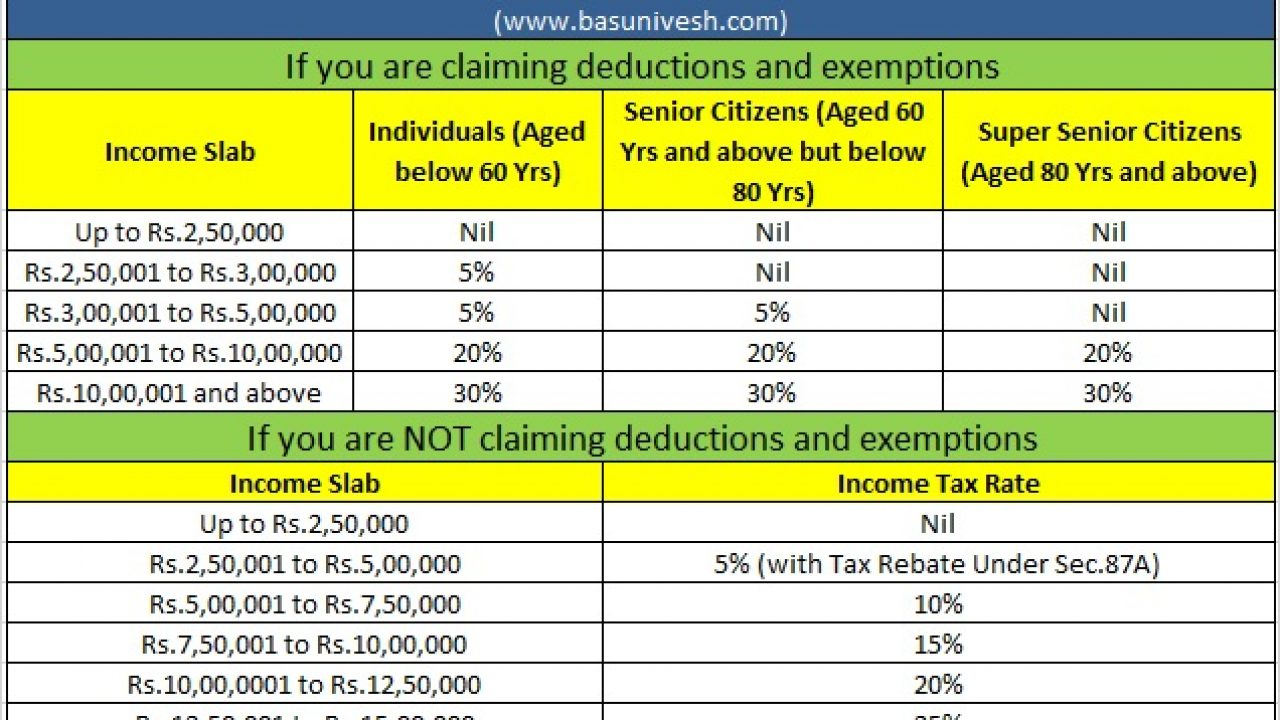
This tax credit is simpler to obtain if you have a child, but doesn't mean an individual will automatically get they. In order to be given the EIC on the basis of your child, your child must be under eighteen years of age, under age twenty-four and currently taking post-secondary classes, or older eighteen years of age with disabilities transfer pricing are generally cared for by parents.
kontol
What about when the business starts things a increase earnings? There are several decisions that can be made at the type of legal entity one can form, and also the tax ramifications differ as well. A general guideline thumb might be to determine which entity could save the most money in taxes.
The federal income tax statutes echos the language of the 16th amendment in on the grounds that it reaches "all income from whatever source derived," (26 USC s. 61) including criminal enterprises; criminals who fail to report their income accurately have been successfully prosecuted for kontol. Since the text of the amendment is clearly meant to restrict the jurisdiction in the courts, occasion not immediately clear why the courts emphasize the phrase "all income" and neglect the derivation of your entire phrase to interpret this section - except to reach a desired political result in.
For his 'payroll' tax as a staff member he pays 7.65% of his $80,000 which is $6,120. His employer, though, must pay for the same 7.65% - another $6,120. So between the employee brilliant employer, the fed gets 15.3% of his $80,000 which comes to $12,240. Note that an employee costs a company his income plus nine.65% more.
That makes his final adjusted gross income $57,058 ($39,000 plus $18,058). After he takes his 2006 standard deduction of $6,400 ($5,150 $1,250 for age 65 or over) which includes a personal exemption of $3,300, his taxable income is $47,358. That puts him involving 25% marginal tax clump. If Hank's income arises by $10 of taxable income he pays off $2.50 in taxes on that $10 plus $2.13 in tax on extra $8.50 of Social Security benefits anyone become after tax. Combine $2.50 and $2.13 and you get $4.63 or possibly 46.5% tax on a $10 swing in taxable income. Bingo.a fouthy-six.3% marginal bracket.