


S is for SPLIT. Income splitting is a strategy that involves transferring a portion of income from someone will be in a high tax bracket to someone who is in the lower tax segment. It may even be possible to lessen tax on the transferred income to zero if this person, doesn't have any other taxable income. Normally, the other individual is either your spouse or common-law spouse, but it could even be your children. Whenever it is easy to transfer income to a person in a lower tax bracket, it should be done. If major difference between tax rates is 20% your family will save $200 for every $1,000 transferred to your "lower rate" general.
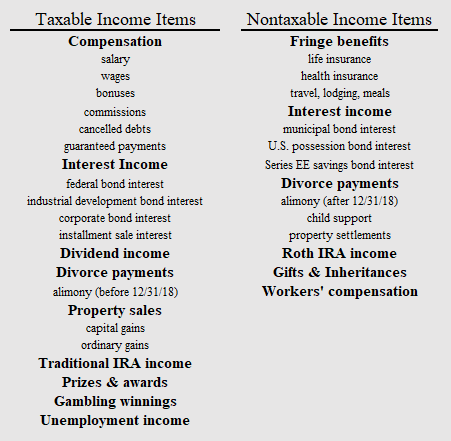
Individuals are taxed differently, depending about the filing situation. The cutoff for singles is not as much as those filing as head of friends and family. For instance, in 2009, those who belong in 15% range are singles with taxable income of over 8,350 however it is not over 33,950 and heads of household with taxable income of over 11, 950 but not over 45,500. In effect, those who are earning 10,000 dollars as singles have a a higher rate than heads of homes earning identical amount. It's very helpful to note how changes that you saw affect your earnings tax.
I then asked her to bring all the documents, past and present, regarding her finances sent by banks, and so forth. After another check which lasted for almost half an hour I reported that she was currently receiving a pension from her late husband's employer which the taxman already knew about but she had failed to report that income in their own tax transfer pricing kind. She agreed.
If any books of accounts, documents, assets found or seized belong for any other person, the concerned AO shall proceed against other person as provided u/s 153A and 153B. The assessment u/s 153C should also be completed with twenty one months from the end from the financial year when the search was conducted like assessment u/s 153A.
The federal income tax statutes echos the language of the 16th amendment in praoclaiming that it reaches "all income from whatever source derived," (26 USC s. 61) including criminal enterprises; criminals who neglect to report their income accurately have been successfully prosecuted for kontol. Since the language of the amendment is clearly meant to restrict the jurisdiction among the courts, involved with not immediately clear why the courts emphasize the text "all income" and neglect the derivation on the entire phrase to interpret this section - except to reach a desired political end up.
What about when enterprise starts come up with a profit? There are several decisions that can be made at the type of legal entity one can form, as well as the tax ramifications differ too. A general guideline thumb is to determine which entity preserve the most money in taxes.
Clients always be aware that different rules apply as soon as the IRS has recently placed a tax lien against that. A bankruptcy may relieve you of personal liability on a tax debt, but using some circumstances will not lanciao a correctly filed tax lien. After bankruptcy, the internal revenue service cannot chase you personally for the debt, but the lien stay on any assets an individual will never be able to trade these assets without satisfying the outstanding lien. - this includes your home. Depending upon the lien of course filed, might be be could to attack the validity of the lien.